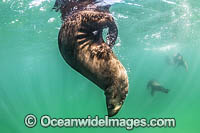
Australian Fur Seals (Arctocephalus pusillus). Photo taken at Chinaman's Hat, Port Phillip Bay, Mornington Peninsula, Victoria, Australia. © Gary Bell / OceanwideImages.com
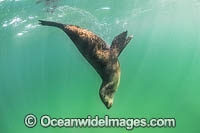
Australian Fur Seal (Arctocephalus pusillus). Photo taken at Chinaman's Hat, Port Phillip Bay, Mornington Peninsula, Victoria, Australia. © Gary Bell / OceanwideImages.com
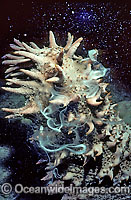
Sea Cucumber (Thelenota ananas) spawning, showing suspended egg and sperm bundles. Photo taken in the Indo-Pacific © Bob Halstead / OceanwideImages.com
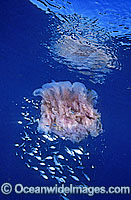
Lions Mane Jellyfish (Cyanea capillata) with juvenile pelagic Fish sheltering around tentacles. Also known as Hair Jelly and Snotty. Stings cause minor skin burn. Eastern Australia © Gary Bell / OceanwideImages.com
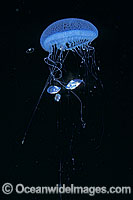
Jellyfish (soon to be described) with juvenile pelagic Fish sheltering around tentacles. Southern Australia © Gary Bell / OceanwideImages.com
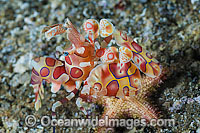
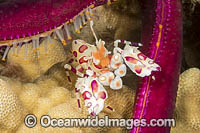
Harlequin Shrimp (Hymenocera picta) feeding on a sea star. Found throughout Indo-Pacific. Photo taken Tulamben, Bali, Indonesia © Gary Bell / OceanwideImages.com
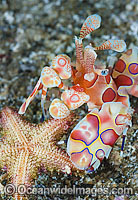
Harlequin Shrimp (Hymenocera picta), feeding on a Sea Star. Found throughout the Indo-Pacific, including the Great Barrier Reef, Australia. Photo taken off Anilao, Philippines. Within Coral Triangle. © Gary Bell / OceanwideImages.com
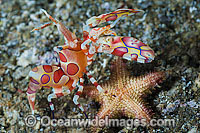
Harlequin Shrimp (Hymenocera picta), feeding on a Sea Star. Found throughout the Indo-Pacific, including the Great Barrier Reef, Australia. Photo taken off Anilao, Philippines. Within Coral Triangle. © Gary Bell / OceanwideImages.com
Harlequin Shrimp (Hymenocera picta), feeding on a Sea Star. Found throughout the Indo-Pacific, including the Great Barrier Reef, Australia. Photo taken off Anilao, Philippines. Within Coral Triangle. © Gary Bell / OceanwideImages.com
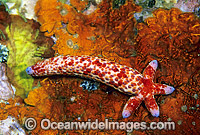
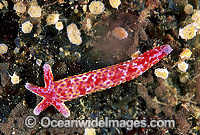
Linckia Sea Star (Linckia multifora) -regenerating from a single arm. Also known as Linckia Starfish. Great Barrier Reef, Queensland, Australia © Gary Bell / OceanwideImages.com
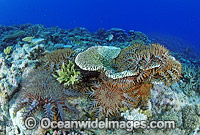
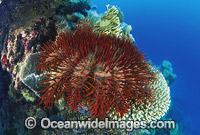
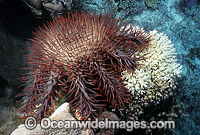
Crown-of-thorns Starfish (Acanthaster planci) feeding on Acropora Coral. This sea star has sharp venomous spines and wounds from the spines can be very painful. Great Barrier Reef, Queensland, Australia © Gary Bell / OceanwideImages.com
Crown-of-thorns Starfish (Acanthaster planci) feeding on Acropora Coral. This sea star has sharp venomous spines and wounds from the spines can be very painful. Great Barrier Reef, Queensland, Australia © Gary Bell / OceanwideImages.com
Crown-of-thorns Starfish (Acanthaster planci) feeding on Acropora Coral. This sea star has sharp venomous spines and wounds from the spines can be very painful. Great Barrier Reef, Queensland, Australia © Gary Bell / OceanwideImages.com
Crown-of-thorns Starfish (Acanthaster planci) feeding on Acropora Coral. This sea star has sharp venomous spines and wounds from the spines can be very painful. Great Barrier Reef, Queensland, Australia © Gary Bell / OceanwideImages.com
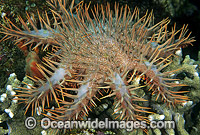
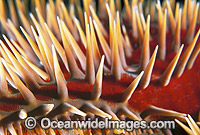
Crown-of-thorns Starfish (Acanthaster planci) - detail of Sea Star venomous spines. Wounds from the spines can be very painful. Great Barrier Reef, Queensland, Australia © Gary Bell / OceanwideImages.com
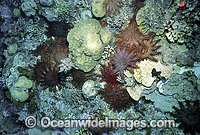
Crown-of-thorns Starfish (Acanthaster planci) feeding on Corals. This sea star has sharp venomous spines and wounds from the spines can be very painful. Great Barrier Reef, Queensland, Australia © Gary Bell / OceanwideImages.com
Linckia Sea Star (Linckia multifora) -regenerating from a single arm. Also known as Linckia Starfish. Great Barrier Reef, Queensland, Australia © Gary Bell / OceanwideImages.com
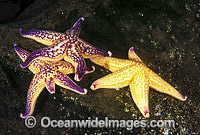
Northern Pacific Sea Stars (Asterias amurensis) - feeding on encrusting organisms. Also known as Northern Pacific Starfish. Introduced species from Japan or Korea, probably from discarded ships ballast water. Derwent Estuary, Tasmania, Australia © Gary Bell / OceanwideImages.com
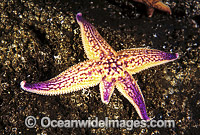
Northern Pacific Sea Star (Asterias amurensis)- regenerating an arm and feeding on encrusting organisms. Also known as Northern Pacific Starfish. Introduced species, probably from discarded ships ballast water. Derwent Estuary, Tasmania, Australia © Gary Bell / OceanwideImages.com
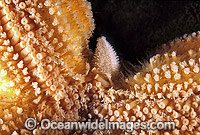
Northern Pacific Sea Star (Asterias amurensis) - detail of regenerating arm. Also known as Northern Pacific Starfish. Introduced species from Japan or Korea, probably from discarded ships ballast water. Derwent Estuary, Tasmania, Australia © Gary Bell / OceanwideImages.com
Eleven-arm Sea Star (Coscinasterias muricata), eating a deceased Globefish (Diodon nichthemerus). Photo taken in Port Phillip Bay, Morninton Peninsula, Victoria, Australia. © Gary Bell / OceanwideImages.com
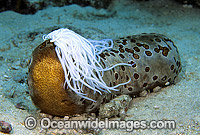
Leopard Sea Cucumber (Bohadschia argus) - with excruded sticky defensive threads called Cuvierian tubules. Great Barrier Reef, Queensland, Australia © Gary Bell / OceanwideImages.com
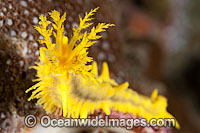
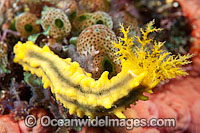
Sea Cucumber (Colochirus robustus), feeding. Found in Indo-West Pacific. Photo taken off Anilao, Philippines. Within the Coral Triangle. © Gary Bell / OceanwideImages.com
Sea Cucumber (Colochirus robustus), feeding. Found in Indo-West Pacific. Photo taken off Anilao, Philippines. Within the Coral Triangle. © Gary Bell / OceanwideImages.com
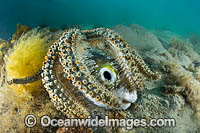
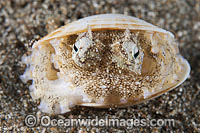
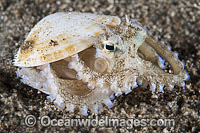
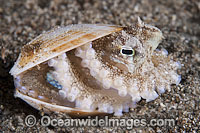
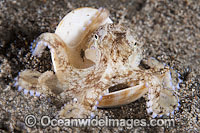
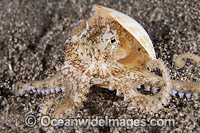
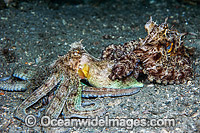
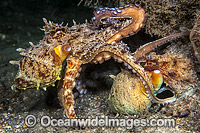
Veined Octopus (Octopus marginatus), living in a bi-valve sea shell. Also known as Coconut Octopus, this species is often sighted hiding in discarded coconut shells. Found throughout the Indo-West Pacific. Anilao, Philippines. Coral Triangle. © Gary Bell / OceanwideImages.com
Veined Octopus (Octopus marginatus), living in a bi-valve sea shell. Also known as Coconut Octopus, this species is often sighted hiding in discarded coconut shells. Found throughout the Indo-West Pacific. Anilao, Philippines. Coral Triangle. © Gary Bell / OceanwideImages.com
Veined Octopus (Octopus marginatus), living in a bi-valve sea shell. Also known as Coconut Octopus, this species is often sighted hiding in discarded coconut shells. Found throughout the Indo-West Pacific. Anilao, Philippines. Coral Triangle. © Gary Bell / OceanwideImages.com
Veined Octopus (Octopus marginatus), living in a bi-valve sea shell. Also known as Coconut Octopus, this species is often sighted hiding in discarded coconut shells. Found throughout the Indo-West Pacific. Anilao, Philippines. Coral Triangle. © Gary Bell / OceanwideImages.com
Veined Octopus (Octopus marginatus), living in a bi-valve sea shell. Also known as Coconut Octopus, this species is often sighted hiding in discarded coconut shells. Found throughout the Indo-West Pacific. Anilao, Philippines. Coral Triangle. © Gary Bell / OceanwideImages.com
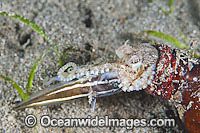
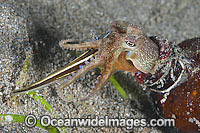
Veined Octopus (Octopus marginatus), also known as Coconut Octopus, hiding in a bottle with a captured juvenile Catfish. Also often sighted hiding in discarded coconut shells. Found throughout the Indo-West Pacific. Anilao, Philippines. Coral Triangle. © Gary Bell / OceanwideImages.com
Veined Octopus (Octopus marginatus), also known as Coconut Octopus, hiding in a bottle with a captured juvenile Catfish. Also often sighted hiding in discarded coconut shells. Found throughout the Indo-West Pacific. Anilao, Philippines. Coral Triangle. © Gary Bell / OceanwideImages.com
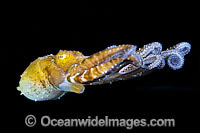
Day Octopus (Octopus cyanea), juvenile swimming. Note the funnel or siphon used to "jet" propel the octopus through the water. Found throughout the Indo-West Pacific. Photo was taken off Anilao, Philippines. Within the Coral Triangle. © Gary Bell / OceanwideImages.com
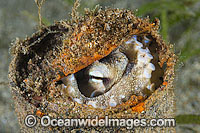
Veined Octopus (Octopus marginatus), hiding in a discarded tin can. Also known as Coconut Octopus as it is often sighted hiding in discarded coconut shells. Found throughout the Indo-West Pacific. Photo taken Lembeh Strait, Indonesia. Coral Triangle. © Gary Bell / OceanwideImages.com
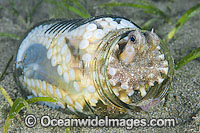
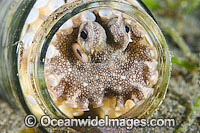
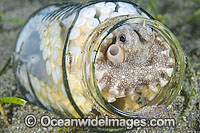
Veined Octopus (Octopus marginatus), hiding in a discarded glass jar. Also known as Coconut Octopus as it is often sighted hiding in discarded coconut shells. Found throughout the Indo-West Pacific. Photo taken Lembeh Strait, Indonesia. Coral Triangle. © Gary Bell / OceanwideImages.com
Veined Octopus (Octopus marginatus), hiding in a discarded glass jar. Also known as Coconut Octopus as it is often sighted hiding in discarded coconut shells. Found throughout the Indo-West Pacific. Photo taken Lembeh Strait, Indonesia. Coral Triangle. © Gary Bell / OceanwideImages.com
Veined Octopus (Octopus marginatus), hiding in a discarded glass jar. Also known as Coconut Octopus as it is often sighted hiding in discarded coconut shells. Found throughout the Indo-West Pacific. Photo taken Lembeh Strait, Indonesia. Coral Triangle. © Gary Bell / OceanwideImages.com
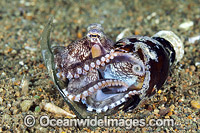
Veined Octopus (Octopus marginatus), hiding in a discarded bottle and using a piece of glass as a door. Also known as Coconut Octopus. Found throughout the Indo-West Pacific. Photo taken off Anilao, Philippines. Within the Coral Triangle. © Gary Bell / OceanwideImages.com
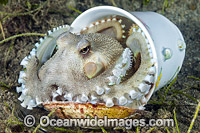
Veined Octopus (Octopus marginatus), hiding in a discarded tea cup and using a scallop shell as a door. Also known as Coconut Octopus. Found throughout the Indo-West Pacific. Photo taken off Anilao, Philippines. Within the Coral Triangle. © Gary Bell / OceanwideImages.com
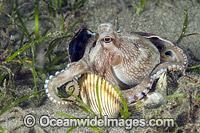
Veined Octopus (Octopus marginatus), hiding in a shell and using a scallop shell as a door. Also known as Coconut Octopus. Found throughout the Indo-West Pacific. Photo taken off Anilao, Philippines. Within the Coral Triangle. © Gary Bell / OceanwideImages.com
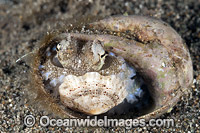
Veined Octopus (Octopus marginatus), hiding in a shell and using another shell as a door. Also known as Coconut Octopus. Found throughout the Indo-West Pacific. Photo taken off Anilao, Philippines. Within the Coral Triangle. © Gary Bell / OceanwideImages.com
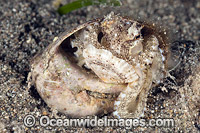
Veined Octopus (Octopus marginatus), hiding in a shell and using another shell as a door. Also known as Coconut Octopus. Found throughout the Indo-West Pacific. Photo taken off Anilao, Philippines. Within the Coral Triangle. © Gary Bell / OceanwideImages.com
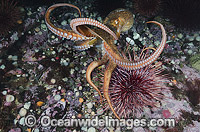
Giant Pacific Octopus (Enteroctopus dofleini) eating urchin. Found in coastal waters of the North Pacific Ocean. Photo taken at Race Rocks, Vancouver Island, Canada. © Andy Murch / OceanwideImages.com
Common Octopus (Octopus vulgaris), mating in the Lake Worth Lagoon, Singer Island, Florida, USA. © Michael Patrick O'Neill / OceanwideImages.com
Common Octopus (Octopus vulgaris), mating in the Lake Worth Lagoon, Singer Island, Florida, USA. © Michael Patrick O'Neill / OceanwideImages.com
Common Octopus (Octopus vulgaris), mating in the Lake Worth Lagoon, Singer Island, Florida, USA. © Michael Patrick O'Neill / OceanwideImages.com
Harlequin Shrimp (Hymenocera picta), feeding on a seastar. Hawaii, USA. © David Fleetham / OceanwideImages.com
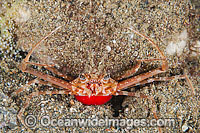
Scissors Crab (Lupocyclus philippinensis), with eggs (orange). This crab is identified by its long pincers and very active at night on sandy bottoms. Found throughout the Indo-West Pacific. Photo taken off Anilao, Philippines. Within the Coral Triangle. © Gary Bell / OceanwideImages.com
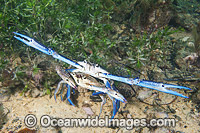
Blue Swimmer Crab (Portunus pelagicus), male mating with female. Also known as Blue Manna Crab. This specie is highly sought after by Commercial fishery. Photo taken at Edithburgh, York Peninsula, South Australia, Australia. © Gary Bell / OceanwideImages.com




;
"Add to Photo Lightbox")



;
"Add to Photo Lightbox")

;
"Add to Photo Lightbox")

;
"Add to Photo Lightbox")

;
"Add to Photo Lightbox")


;
"Add to Photo Lightbox")

;
"Add to Photo Lightbox")

;
"Add to Photo Lightbox")

;
"Add to Photo Lightbox")

;
"Add to Photo Lightbox")

;
"Add to Photo Lightbox")

;
"Add to Photo Lightbox")

;
"Add to Photo Lightbox")

;
"Add to Photo Lightbox")

;
"Add to Photo Lightbox")

;
"Add to Photo Lightbox")

;
"Add to Photo Lightbox")

;
"Add to Photo Lightbox")

;
"Add to Photo Lightbox")

;
"Add to Photo Lightbox")

;
"Add to Photo Lightbox")

;
"Add to Photo Lightbox")

;
"Add to Photo Lightbox")

;
"Add to Photo Lightbox")

;
"Add to Photo Lightbox")

;
"Add to Photo Lightbox")

;
"Add to Photo Lightbox")

;
"Add to Photo Lightbox")

;
"Add to Photo Lightbox")

;
"Add to Photo Lightbox")

;
"Add to Photo Lightbox")

;
"Add to Photo Lightbox")

;
"Add to Photo Lightbox")

;
"Add to Photo Lightbox")

;
"Add to Photo Lightbox")

;
"Add to Photo Lightbox")

;
"Add to Photo Lightbox")

;
"Add to Photo Lightbox")

;
"Add to Photo Lightbox")

;
"Add to Photo Lightbox")

;
"Add to Photo Lightbox")

;
"Add to Photo Lightbox")


;
"Add to Photo Lightbox")

;
"Add to Photo Lightbox")

;
"Add to Photo Lightbox")

;
"Add to Photo Lightbox")

;
"Add to Photo Lightbox")

;
"Add to Photo Lightbox")

